How Businesses Can Use Blockchain for Supply Chain Transparency

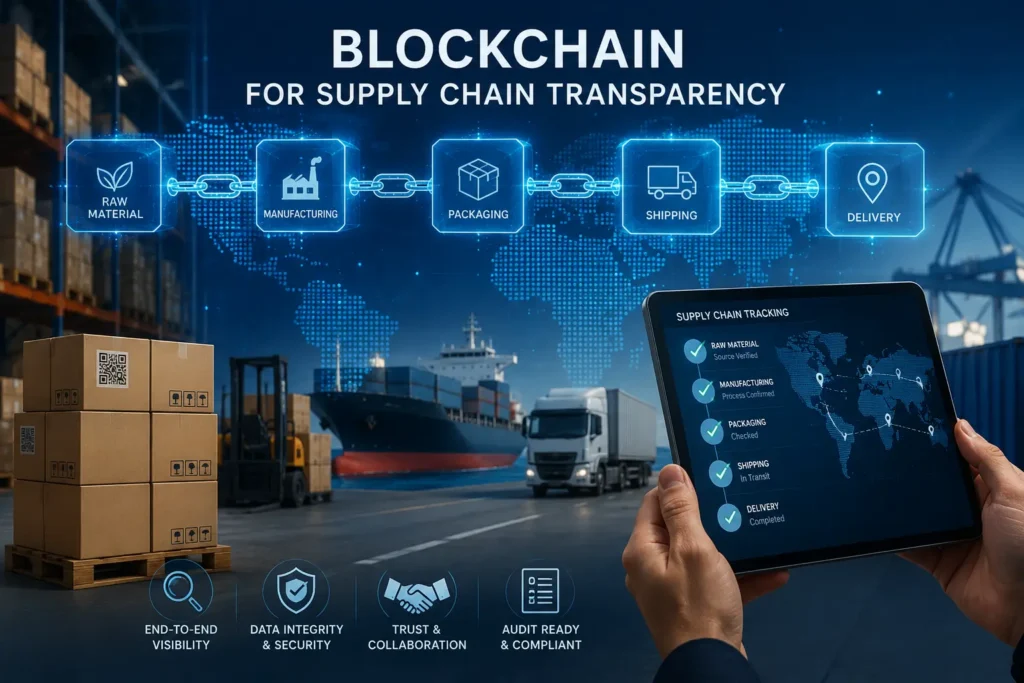
Imagine you are buying a bag of coffee that says “ethically sourced” on the label. It will make you proud to have played your part in environmental sustainability. But could you actually trace back where those coffee beans came from or how they were handled along the way? In fact, could the company that sold you these coffee beans prove that? In most cases, the honest answer is no. But using blockchain for supply chain transparency can change that. Blockchain technology offers a single source of truth, immutability, traceability, and much more to make this possible.
In today’s world, supply chains are growing complex. Products travel through a dizzying relay of farmers, factories, shippers, customs agents, distributors, and retailers before they land in your hands. But that’s not the real issue. The actual problem is that whenever they exchange hands, some information gets lost. Think of it like playing the game of telephone across multiple countries, companies, and individuals.
Blockchain technology has the potential to solve this. It’s not a fix-everything solution (we will get to its limits, too). Instead, it has some capabilities to facilitate transparency and prevent data loss. But before getting into that, let’s understand the challenges supply chain management is facing today.
Challenges Facing Supply Chain Management and the Need for Transparency
The biggest challenge is the growing sophistication. While global commerce is unstable today due to mounting geopolitical concerns, it is far better than it was a decade or two ago. Thanks to this simplicity in global trade, more and more businesses are trading with multiple nations. As supply chains become vast because of this, it adds an increasing level of sophistication.
Now each of these players in a supply chain, be it a manufacturer, freight forwarder, warehouse, or retailer, runs their own systems and maintains their own spreadsheets to store data they do not necessarily exchange with other parties. This results in fragmented data across disconnected systems and impacts trust.
Another reason for the ask for transparency is counterfeiting. The World Health Organization released a study in December 2024 on the supply of falsified medications.
At least 1 in 10 medicines in low- and middle-income countries are substandard or falsified.
Per a report by the World Health Organization.
The report also noted that countries are spending a whopping 30.5 billion annually on these products.
This isn’t limited to medicines, though. It is true across multiple product lines, including electronics, wine, and automobile parts. Traditional paper trails are easy to fake, which calls for a digital ledger like blockchain to bring transparency in the supply chain.
There’s also a lack of traceability, which is often required, such as when finding the source of contaminated food or ensuring ethical sourcing. Consumers today care about whether their diamonds fund conflict, whether their cotton involves forced labor, or whether their seafood was illegally sourced. But most retailers themselves don’t have a clue or complete visibility of their supply chains beyond first-tier suppliers.
When you put all of this together, the one thing that is clear is that while efficiency may be one of the supply chain’s biggest problems, a lack of trust is becoming a growing challenge. Bringing in blockchain-based supply chain transparency mitigates gaps and builds trust.
Using Blockchain for Supply Chain Transparency
Blockchain has several key capabilities that make it the right choice for the job. A study from the Journal of Transport and Supply Chain Management notes that blockchain technology can potentially influence both trust and transparency in the supply chain. In fact, transparency often serves as a middle ground, mediating the relationship between blockchain and supply chain trust. Many blockchain features, such as immutability, traceability, and smart contracts, also play key roles in facilitating transparency.
Traceability
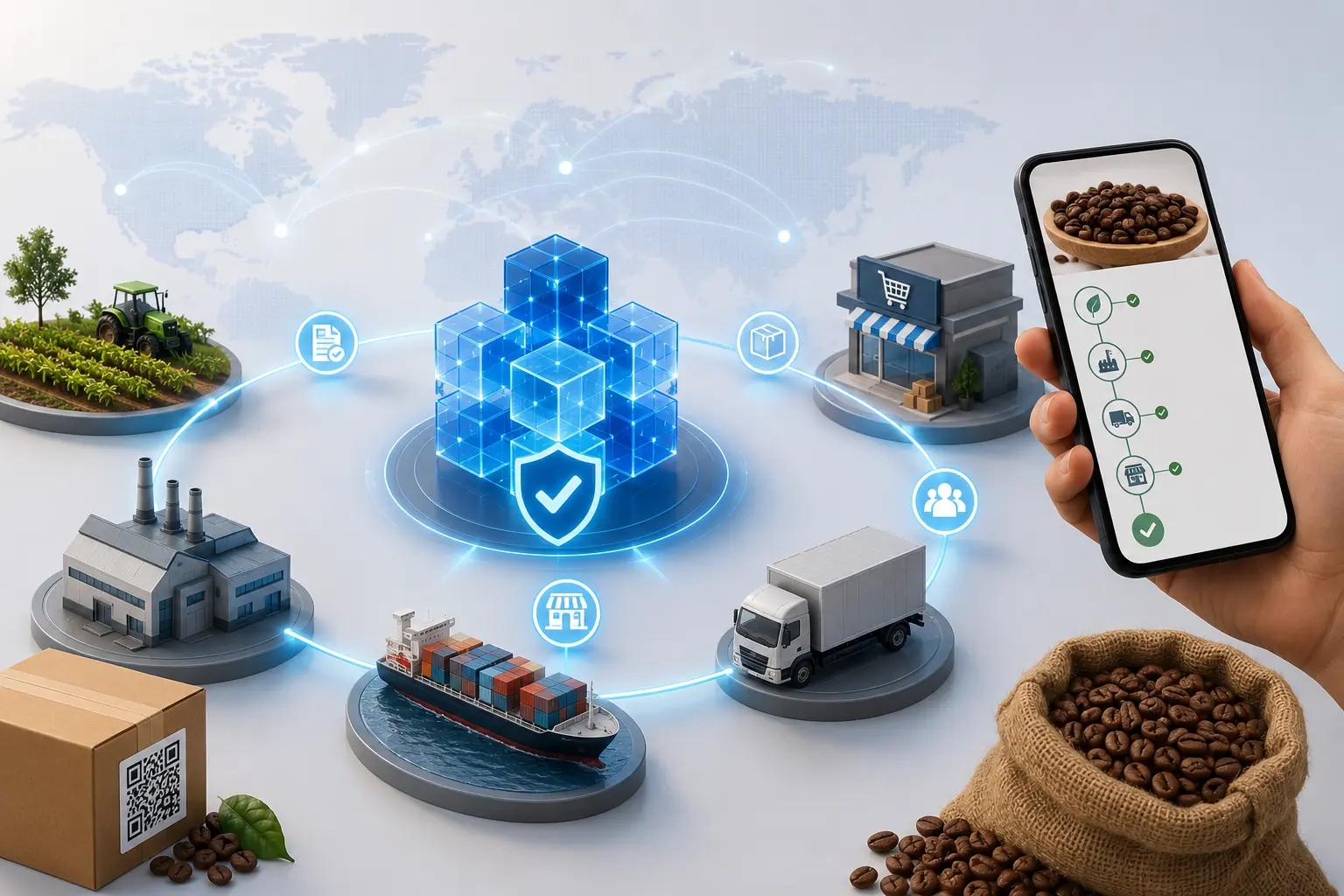
The biggest benefit of using blockchain technology for transparency is traceability. It allows all stakeholders to trace and monitor the entire product journey, from its beginning to its end. Its ledger records every transaction and movement across the supply chain. Walmart has already put this into practice by using blockchain to trace a product’s origins.
It’s not just these suppliers or retailers, though. Once blockchain becomes part of supply chain management, environmentally conscious users can also trace products back to their raw materials and manufacturing processes, taking pride in what they buy and use.
Single Source of Truth
Currently, almost every supply chain party maintains its own private version of events. Blockchain creates a single distributed ledger for everyone. When a cargo moves from the factory to the port, the event is recorded. When it leaves the port and reaches the destination, that event is recorded, too. All authorized parties can view the details of these recorded events, including timings, weight, quantity, etc., anytime and from anywhere.
Immutability
Distributed blockchain ledgers are practically immutable. That’s because every entry is cryptographically linked to the one before it. Thus, tampering with a single block would require you to change the entire ledger, which is almost impossible in a ledger with multiple parties involved.
Say, for example, there’s a coffee brand that claims that its beans are ethically sourced. Blockchain will record every event, from how the beans were harvested and processed to how they were packaged and moved. Now, if a single batch is not ethically sourced, it will also be registered on the blockchain. If that occurs, the coffee brand cannot quietly change the source or harvest location of the beans. Even if it tries to change, it will be logged as a separate event on the blockchain and publicly visible to all stakeholders.
Smart Contracts
Smart contracts, as the name suggests, are basically contracts that are automatically enforced once a triggering event occurs. In the supply chain, they can be useful for releasing payments and ensuring accountability for assigned tasks.
For instance, a raw material provider and a manufacturer can enter into a contract to prevent shipment delays. In the contract, they can agree on a pattern in which the amount of delay results in a reduction in payment. So if the shipment is delayed by a day, the manufacturer may pay 2% less; if it is delayed by two days, the manufacturer may pay 4% less, and so on. In this scenario, the raw material provider will have to take accountability for delays.
Provenance Tracking at the Batch Level
Each product can have an ID that organizations can tie to a QR code or an RFID tag. Thus, when an end product reaches the shelves or consumers’ hands, it will carry the story of its entire journey. This can be extremely useful in industries like food and beverage, where products can be easily contaminated. A seafood company, for example, can assign a digital identity to each batch of tuna to hold information like fishing location, date of catch, processing facility, and inspection results.
Benefits of Blockchain for Supply Chain Management
While transparency is the headline act for using blockchain in supply chain management, it isn’t an isolated benefit.
- Quick dispute resolution: Since many parties are involved in a complex supply chain, dispute resolution becomes lengthy and challenging. But when everyone is looking at the same immutable record, these parties can quickly solve disagreements over delays or quality issues.
- Improved efficiency: Smart contracts mitigate the need for manual paperwork. They also automate verification and payment to improve efficiency, while reducing human error across the supply chain.
- Better recall management: Tracing a contaminated batch would take days or even weeks without blockchain. But with the distributed ledger in place, companies can pinpoint the exact contaminated batch in minutes.
- Stronger stakeholder relationships: Transparency builds trust, and as trust grows, stakeholder relationships strengthen. For instance, consumers will return to retailers when they know how a product’s raw materials were sourced. Similarly, retailers will trust manufacturers and do more business with them if they know who is causing the delay and take appropriate action.
- Enhanced regulatory compliance: Many industries, such as pharmaceuticals and food, face strict documentation requirements. Blockchain gives an audit-ready trail as a byproduct of operations.
These benefits, especially transparency and immutability, are why blockchain is finding applications across multiple industries. Even a strictly regulated industry like finance is adopting blockchain. In fact, Japan recently announced a blockchain trial to settle stocks and government bonds instantly, rather than taking 1 or 2 days.
However, it’s not all positive when it comes to leveraging blockchain for transparency. Like any other technology, the distributed ledger also faces key challenges that prevent its adoption. Some of these challenges include high implementation costs, scalability concerns, and interoperability issues.
Real-World Use Cases of Blockchain for Supply Chain Transparency
Blockchain looks very good on paper for supply chain transparency, but is anyone actually using it? Well, there are many multinational companies already leveraging the promise of this distributed ledger technology.
Walmart and IBM Food Trust
Walmart is one of the biggest retailers with over 10,000 stores worldwide. It is also one of the most vocal and early adopters of blockchain technology. In 2017, Walmart announced plans to implement blockchain technology with the help of IBM to reduce traceability time from days to mere seconds. And it was successful. One of the most notable stats from Walmart’s early pilots was that it could reduce the time required to trace a batch of mangoes to 2.2 seconds.
The IBM platform then evolved into IBM Food Trust. It launched in 2018 with Walmart, Carrefour, Nestlé, and Tyson among its early participants. It remains one of the most prominent multi-party food traceability platforms to date.
De Beers’ Tracr
The diamond industry has a long history with “blood diamonds.” Many see them as conflict stones used to fund violence. To help industry leaders address the accusations and speculation surrounding blood diamonds, De Beers built Tracr. It is a blockchain platform that tracks the entire journey of diamonds, from mining through cutting, polishing, and retail.
The Gemological Institute of America (GIA) recently acquired 30% shares of De Beers’ Tracr.
“At GIA, our mission has always been rooted in trust, integrity, and consumer confidence.”
Said Pritesh Patel, President and CEO of GIA, in the acquisition press release.
Al Cook, CEO of De Beers Group, also noted that consumers deserve to know where their diamonds come from. They should feel more confident while purchasing these stones.
VeChain
VeChain has partnered with brands across fashion, automotive, and agriculture to embed trackable chips or codes into products. This lets customers verify authenticity and origin with a simple phone scan. It is a direct hit against the massive counterfeit goods market.
There are many other examples, such as the MediLedger DSCSA Pilot Project. It is a US Food and Drug Administration-backed test of a blockchain network to track and trace prescription drugs. Launched in 2019, the project works with some of the world’s leading pharmaceutical manufacturers, wholesale distributors, and more, including but not limited to Amgen, Dermira, and Cardinal Health.
However, it is also important for you to know about projects that didn’t work out. For instance, Maersk and IBM launched TradeLens in 2018. But they had to shut down the platform after it failed to achieve commercial viability.
“TradeLens was founded on the bold vision to make a leap in global supply chain digitization as an open and neutral industry platform. Unfortunately, while we successfully developed a viable platform, the need for full global industry collaboration has not been achieved. As a result, TradeLens has not reached the level of commercial viability necessary to continue work and meet the financial expectations as an independent business.”
Rotem Hershko, Head of Business Platforms at A.P. Moller – Maersk, said when announcing discontinuation of TradeLens.
This shows that while use of blockchain in supply chain can be very useful, it does not necessarily guarantee success. Before implementing blockchain, it is important to ensure that all stakeholders are on board. Businesses must identify the key problem to solve, interact with all stakeholders, and create a strategy for gradual adoption.
Integrating Blockchain With AI and IoT in Supply Chain
Blockchain has the potential to bring transparency even to the most sophisticated supply chains. But it becomes more powerful when combined with other technologies, especially artificial intelligence (AI) and the Internet of Things (IoT).
IoT sensors, for instance, can directly feed data into a blockchain in real time. Be it GPS trackers, temperature sensors, or humidity monitors attached to shipping containers. This prevents human entry and tampering.
So, if a refrigerated truck carrying vaccines drifts outside the safe temperature zone for even ten minutes, the event gets permanently recorded. Now, if this results in product contamination, every party in the supply chain can quickly trace the incident that led to the contamination and the resulting losses.
Grand View Research, therefore, estimates the blockchain IoT market to grow at an unprecedented 58.2% CAGR between 2023 and 2030. Worth around $1,758.4 million in 2026, it could potentially reach $12,679.5 million by the end of the forecast period.
AI, on the other hand, can play to its strengths in pattern recognition and prediction. Stakeholders in the supply chain can use artificial intelligence with blockchain to analyze all the information recorded on the immutable, distributed ledger. With this, stakeholders can spot anomalies, predict delays, forecast demand, and flag potential fraud before it becomes a real problem.
The combination of all three technologies can facilitate automation, too. For example, IoT sensors can detect when a shipment has cleared customs, while an AI system can confirm that the data appears legitimate by recognizing patterns in historical data. Once both things are confirmed, a blockchain-based smart contract can automatically release payment. This creates a win-win situation for every participant of the supply chain.
Conclusion
Blockchain is never going to single-handedly fix supply chain headaches, and that’s a fact. However, using blockchain for supply chain transparency can help you go from being “trust me” to “check for yourself.” And when you integrate it with other technologies like artificial intelligence or Internet of Things, blockchain can create an ecosystem where trust is at the core of every transaction across the supply chain.
Many businesses have already set an example for you. But before you jump on the bandwagon, remember that it is important to identify the problem first and start small. When you have the foundation right, you can easily deploy and scale blockchain to make the supply chain more transparent.
Frequently Asked Questions
Early adopters were large enterprises, as is usually the case with most technology adoption, because they had resources to spare. But that’s no longer true with the advent of cloud-based blockchain-as-a-service platforms. These platforms have lowered the barrier to entry considerably for smaller businesses.
Blockchain is used in the supply chain to create an immutable, distributed ledger that offers transparency and traceability. All authorized parties can access the single source of truth through digital records that allow tracking a product from source to end users.
Blockchain transparency means that everyone with access to a ledger can view digital records in real-time. It also maintains privacy by hiding users’ names.
Blockchain supply chain transparency implementation varies widely from company to company. It includes several steps, such as identifying problems, mapping the current supply chain and its data flows, choosing the right blockchain platform, integrating with other systems and technologies, and more. So there’s no single universal answer to this. However, you can launch a focused pilot program within a few months, while full-scale rollout can take a year or more.